Review: Shakes the Clown (1991)

>> Saturday, November 20, 2010

USA/C-87m./Dir: Bobcat Goldthwait/Wr: Bobcat Goldthwait/Cast: Bobcat Goldthwait (Shakes the Clown), Julie Brown (Judy), Tom Kenny (Binky the Clown), Blake Clark (Stenchy the Clown), Adam Sandler (Dink the Clown), Kathy Griffin (Lucy), Paul Dooley (Owen Cheese), Robin Williams (Mime Jerry)

When Shakes the Clown was released in 1991, Betsy Sherman’s review in the Boston Globe famously referred to the film as “the Citizen Kane of Alcoholic Clown Movies.” While there are few other motion pictures vying for that title, in truth, Shakes the Clown isn’t the Citizen Kane of anything. “The Showgirls of Alcoholic Clown Movies” would be a more apt description. The picture is poorly constructed and amateurishly filmed, wasting comic possibilities at every opportunity. Still (warning: faint praise ahead), Shakes the Clown does generate sporadic laughs, and it is one of the more watchable bad movies.

The story is set in the jester Mecca of Palukaville, where birthday party clowns spend their down time boozing it up at the Twisted Balloon bar, beating up street mimes, and dreaming of hosting cartoon shows. The most talented of these dreamers is Shakes (Bobcat Goldthwait), a great children’s entertainer, but a bigger blackout drunk. When the unfunny, cokehead Binky the Clown (Tom Kenny) is awarded the coveted job as host of the local kiddie show, Shakes descends into a downward spiral of alcoholism and depression. Shakes’ buddies (Blake Clark and Adam Sandler) try to wean their friend off the bottle, but Shakes falls off the wagon and is fired in the process. Shortly thereafter, his boss (Paul Dooley) turns up dead, and Shakes has to take it on the lam, disguised as a mime. Can our hero pull it together and uncover the true culprit, or will he just get blotto once again?

Shakes the Clown was Bobcat Goldthwait’s first film as a writer/director, and it suffers from overreach and underwriting. The comedy has an interesting premise, and Goldthwait does a reasonably good job at bringing the world of Palukaville to life. Unfortunately, costumes and makeup do not a great comedy make. Goldthwait would have done better to scale back the design elements and spend more time punching up the script, because the laughs are thin and infrequent.

The cast (made up mainly of stand-up comics with little film experience) is fine; and Goldthwait, Brown, Clark, and Sandler often squeeze more humor out of their lines than the dialogue really warrants. However, funnyman Tom Kenny is wasted in the role of the villainous, unfunny Binky. By writing Binky as a clown devoid of a sense of humor, Goldthwait stripped the story of logic and the character of potential menace. It makes no sense that a television station would hire an unfunny clown to host their cartoon show. Binky would have posed more of a threat if he actually had strong comedy chops and if no one besides Shakes could see the darkness that lay beneath the surface.

Unfortunately, Binky is only one of the film’s many missed opportunities. Ripe comic situations (such as a country bar for rodeo clowns and a clown at an AA meeting) go absolutely nowhere. Still, enough booze and clown-related jokes hit the bullseye to warrant a mild recommendation for fans of soused cinema and bad movies in general.

Drinks Consumed--Beer (Braderbrau and others), bourbon, and scotch

Intoxicating Effects--Belching, vomiting, hangover, swearing, drunk driving, passing out, slurred speech, sneaking sips, public disturbance, destruction of property, jail time, and delirium tremens

Potent Quotables--DINK: The thing I don’t understand is why he just can’t drink normally like the rest of us. Ya know, he gets so out of control.
JUDY: Yeah.
STENCHY: Maybe it’s because he saw his father crushed to death by an elephant. A thing like that can scar you for life.
LUCY: He drinks so much to forget he’s a fucking alcoholic.

Video Availability--Shakes the Clown - Widescreen DVD (Sony)

Similarly Sauced Cinema--For better mix of laughs and vulgarity, check out Bad Santa (2003) instead.

Read more...

Booze News: 2011 Silent Movies Calendar

>> Sunday, November 7, 2010

Christmas is just around the corner, and that means two things...

  1. It will soon be time for your annual viewing of Bad Santa
  2. It's time for my annual sales pitch for the Silent Movies Calendar
If you've been following this site for awhile, you probably already know that every year Rodney Sauer of the Mont Alto Motion Picture Orchestra produces a calendar featuring rare film stills and photographs of silent movie stars contributed by fans. In addition to a dozen beautiful photos in glorious black and white, the calendar also features birthdays of silent-era film stars and personalities, as well as notable marriages, deaths, film openings, and other significant dates. Best of all, the net proceeds made from the sale of the calendars (after printing expenses) are donated to support silent film restoration.

I've purchased the calendar for the past couple of years, and I'm especially looking forward to this year's release. That's because the 2011 Silent Movies Calendar is subtitled "The Swimsuit Issue." If you've ever wanted to see Clara Bow, Joan Crawford, and Gloria Swanson in 1920's swimwear, this is the calendar for you. Of course, there's also eye candy for the ladies--Rudolph Valentino, Douglas Fairbanks--and a few eyesores (Mack Swain, for instance).

Rodney has been able to reduce the price of the calendar this year to $14.74 ($12 plus S&H), so supporting efforts to preserve our precious film heritage has never been more affordable. Follow the link below and get your Silent Movies Swimsuit Calendar today!

Get it here-->2011 Silent Movies Calendar

Cheers,
garv

Read more...

Booze News: First ARTHUR, Now THE THIN MAN?

>> Saturday, October 30, 2010

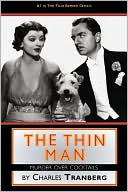
Unoriginality is rampant in Hollywood, and it appears that the new target for motion picture remakes is classic soused cinema. First Spielberg planned to direct a retread of Harvey (1950), a project which eventually imploded. Then Russell Brand decided to step into the shoes of the late Dudley Moore to play the lovable lush Arthur Bach in an updated version of the 1981 classic. Now New York Magazine's Vulture blog is reporting that Johnny Depp wants Rob Marshall to direct him in a remake of The Thin Man (1934).

As much as I love Depp (especially his work in Ed Wood), I just don't see him as the urbane, drunky sleuth Nick Charles. Johnny will probably do a decent job, but if I was going to recast the William Powell part for the 21st Century, Robert Downey Jr. seems better suited to the role. Still, why tamper with a classic? Trying to recreate the William Powell/Myrna Loy chemistry with another pair of actors seems a near impossible task. It certainly didn't work with the short-lived 1957 Thin Man TV show or the 1990 Broadway musical Nick & Nora (which ran a whole 9 performances).

Of course, if Johnny Depp wants to do it, he has the clout to make the movie happen. But even if the project does get off the ground, it may be several years before it hits the multiplex. Depp has The Tourist, Rango, and The Rum Diary (based on the Hunter S. Thompson novel) in the can. He's currently filming Pirates of the Caribbean: On Stranger Tides, and there has been talk of him starring as Tonto in a new Lone Ranger film and as Barnabas Collins in a Tim Burton remake of Dark Shadows. Let's hope another property catches Johnny's fancy, so he'll leave Nick and Nora Charles alone.

Here's a link to the original Vulture post:
Johnny Depp wants Rob Marsall to direct him in a Thin Man remake

By the way, the post mentions that Dashiell Hammett never wrote a sequel to his novel, The Thin Man. That isn't strictly true. Hammett wrote the original stories for the first three Thin Man films, which screen writers Frances Goodrich and Albert Hackett used as an outline. Hammett's story, After the Thin Man, has even been published in The New Black Mask, Nos. 5 and 6.

Cheers,
garv

The Complete Thin Man Collection (The Thin Man / After the Thin Man / Another Thin Man / Shadow of the Thin Man / The Thin Man Goes Home / Song of the Thin Man)

Read more...

Review: Steamboat Round the Bend (1935)

>> Sunday, October 17, 2010

USA/B&W-81m./Dir: John Ford/Wr: Dudley Nichols & Lamar Trotti/Cast: Will Rogers (Dr. John Pearly), Anne Shirley (Fleety Belle), John McGuire (Duke), Berton Churchill (New Moses), Francis Ford (Efe), Irvin S. Cobb (Captain Eli), Eugene Pallette (Sheriff Rufe Jeffers), Stepin Fetchit (Jonah)

Fame is indeed fleeting. In the 1920’s and 30’s, Will Rogers was one of the best known and most loved American personalities. He charmed audiences with his rope tricks, witticisms, and homespun political satire (think Jon Stewart with a touch of Jeff Foxworthy); and he rose to entertainment’s highest ranks in vaudeville, on Broadway, as a newspaper columnist, and eventually in the movies. Between 1918 and 1935, Rogers starred in 40 feature films and dozens of short subjects; and his movies were so popular that theater owners named him the number one box office attraction in 1933. Yet today his films are virtually unwatched and unremembered.

In recent years, a handful of Rogers features have been released in DVD boxsets, allowing new audiences to discover the comedian. Amongst these releases is Rogers’ penultimate film, Steamboat Round the Bend, which turns out to be more alcohol-fueled than the riverboat comedies of W.C. Fields, Tillie and Gus (1933) and Mississippi (1935). The film, set in the early 1900’s, stars Rogers as Doctor John Pearly, a dealer of extremely alcoholic patent medicine. Doc decides to give up the booze-pushing business and buys a rundown steamboat, which he fixes up with the help of an engineer (Francis Ford) who is addicted to Pearly’s potent brew. Pearly bets his fixed-up tub against the best steamboat on the Mississippi in a winner-take-all race, but he gets sidetracked when his nephew Duke (John McGuire) is sentenced to hang for murder. With the help of Duke’s betrothed, Fleety Belle (Anne Shirley), Doc searches the river for the one witness who can prove that Duke isn’t guilty, a prohibitionist preacher who calls himself “The New Moses.” Can Doc and Fleety Belle save Duke from execution in time to win the big steamboat race? What do you think?

Audiences of the Thirties were drawn to Steamboat Round the Bend due to Will Rogers’ celebrity (and due to morbid curiosity, as the film was released after Rogers’ unexpected death in a plane crash), but the movie is of most interest to film scholars today because it was directed by John Ford. Although Ford was not a filmmaker noted for producing comedies, the film has a pleasant, easygoing style that meshes well with Rogers’ homespun humor. This was actually the third film Rogers and Ford made together, and the partnership would have likely continued if not for Rogers’ untimely death.

While the film is a good introduction to Rogers’ relaxed comic delivery, it is far from his best film. The movie is overstuffed for an 81-minute comedy, containing con-man patter, liquor-laced humor, murder, a few musical numbers, possible execution, revivalist preachers, and a big boat race. Modern audiences may also be turned off by stereotypical depiction of African-Americans, especially the character of Jonah, portrayed by Stepin Fetchit. However, it is important to remember that Will Rogers was fairly progressive for his day; and he insisted that Stepin Fetchit be hired as a supporting actor in his movies because they were good friends from his vaudeville days.

Will Rogers’ comedies may seem a little too laid back for today’s audiences, but if you come to Steamboat Round the Bend in the proper frame of mind, you’ll find plenty to like. Especially fun are Francis Ford (the director’s brother) as the constantly inebriated steamboat engineer and the film’s climactic steamboat race, in which booze is used to win the day.

Drinks Consumed--Whiskey-based patent medicine, rum, and Mint Julep

Intoxicating Effects--Staggering and slurred speech

Potent Quotables--NEW MOSES: Raise your right hand and take the pledge. Brother, what do I see in your hand? Don’t be a hog. Cast the enemy away! Bury demon rum in the waters of the mighty Mississippi! Fling it away, I say! I swear henceforth, liquor shall never touch my lips.
EFE: Me too.

Video Availability--DVD, as part of either the Will Rogers Collection, Vol. 1 or the Ford At Fox Collection: John Ford's American Comedies (Fox)

Similarly Sauced Cinema--W.C. Fields also got involved in a riverboat race in Tillie and Gus (1933).

Read more...

Booze News: Add some alcohol to the National Film Registry

>> Friday, October 1, 2010

Alcohol has made an invaluable contribution to the history of American film. However, soused cinema is terribly underrepresented in the National Film Registry, the list of motion pictures selected by the United States National Film Preservation Board for preservation in the Library of Congress. Now is your chance to change that!

Each year the board selects up to 25 films to add to the list, and amongst the factors that they weigh when selecting the films are suggestions from the general public.

You have until October 15th to forward your film recommendations to:
dross@loc.gov

The only conditions regarding the your suggestions are:

  1. Each film must be at least 10 years old
  2. It should be “culturally, historically, or aesthetically significant”
  3. You can recommend no more than 50 titles in a single year
Let's stuff the ballot boxes with alky-centric titles!!!

There are dozens of "booze movies" that can be considered “culturally, historically, or aesthetically significant.” Every major movie genre and trend from the silent era to the present day has in some way been tied to strong drink.
Silent soused slapstick, Prohibition gangster films, champagne-soaked screwball comedies, film noir, Westerns, soapy melodramas, 60’s swinger and spy cinema, antihero movies and angry young men films, and modern-day gross-out comedies all have one thing in common--liquor. Without alcohol, the history of film would be dramatically different.

Here are a handful of significant booze movies that should be in the National Film Registry. Please join my campaign to vote for these important soused cinema landmarks:

One A.M. (1916) - Charlie Chaplin's solo tour de force and the culmination of the drunken slapstick that he developed from his "Mumming Birds" stage act through his numerous liquor-laced Keystone and Essanay short subjects.

The Fatal Glass of Beer (1933) - Not only the funniest short subject ever produced. It's also a filmed record of W.C. Fields' "Stolen Bonds" stage sketch and a comedy that was far ahead of its time. The Fatal Glass of Beer was post-modern before the term existed.

It's A Gift (1934) - The only film that rivals The Bank Dick (already inducted into the Registry) as W.C. Fields' greatest film. It contains one of the longest sustained laugh sequences in the history of motion pictures--the immortal "front porch" scene.

The Lost Weekend (1945) - Prior to The Lost Weekend, alcoholism was portrayed as comedy relief or as the "shame of the nation." This was the first film to look at alcoholism seriously as a disease. This much-imitated film still packs a punch today.

Who's Afraid of Virginia Woolf (1966) - Mike Nichols' film adaptation of Edward Albee's play was one of the first films to buck the old Production Code. The MPAA film rating system underwent changes as a direct result of this foul-mouthed work of art.

The Iceman Cometh (1973) - A great American film of a great American play! The Iceman Cometh is the best of the movies produced under the experimental banner of the American Film Theatre.

Recommend one or all of these, but join my campaign to get national recognition for these trailblazing soused cinema classics.

Cheers,
garv

Read more...

Review: Moulin Rouge! (2001)

>> Friday, September 24, 2010

USA/C-127m./Dir: Baz Luhrmann/Wr: Baz Luhrmann & Craig Pearce/Cast: Ewan McGregor (Christian), Nicole Kidman (Satine), John Leguizamo (Toulouse-Lautrec), Jim Broadbent (Harold Zidler), Richard Roxburgh (The Duke), Jacek Koman (The Narcoleptic Argentinean), Kylie Minogue (The Green Fairy)

No drink has been subject to more misinformation and unwarranted vilification than absinthe. In the early 1900’s, the forces of Prohibition and the competing French wine industry spread rumors that absinthe was poisonous, hallucinogenic, and unnaturally addictive. The propaganda stuck, and absinthe was banned in most countries until the last decade. However, in truth, absinthe is simply an herbal spirit distilled from aniseed, fennel seed, and wormwood. It is no more dangerous than any other hard alcohol.

In recent years, the truth about absinthe has begun to surface and most of the bans have been lifted. Curious drinkers can once again enjoy the spirit through the traditional louching method (water added slowly, usually over a sugar cube to slightly sweeten the drink) or as an essential ingredient in many classic cocktails. Unfortunately, the new century has been just as cruel to absinthe as it has been kind, in that the beverage has been irrevocably linked with Baz Luhrmann’s 2001 musical crap-tacular Moulin Rouge!

If modern drinkers think of absinthe at all, it is likely in relation to the instantly iconic “I’m the Green Fairy” scene from Moulin Rouge! In the film, Christian(Ewan McGregor), a naïve writer, settles in the Montmartre district of Paris and falls in with a group of bohemians, led by Toulouse-Lautrec (John Leguizamo). The ragtag band of artists and musicians not only rope the young poet into writing a musical production for the Moulin Rouge cabaret; they also introduce the innocent to absinthe. In the film, hallucinations beset Christian as soon as he takes his first taste. He imagines that the fairy illustrated on the label of the bottle comes to life. At first, the animated pixie (Kylie Minogue) allures the writer by dancing suggestively, and then she bedevils him with more dizzying visions. Not only does the film propagate the hallucinatory myths surrounding absinthe; it also depicts the bohemians preparing the drink incorrectly (fire was never a part of the traditional louching method).

Of course, you probably wonder what I think of the film beyond the inaccurate depiction of absinthe and its effects. In truth, I try to think about it as little as possible. The film is god-awful. Sure it’s pretty to look at, for two seconds at a time--because that is the longest the editor chooses to hold a shot--but story-wise and musically it’s anemic. The characters are barely one-dimensional, the narrative is pure melodrama, and the stabs at humor (punctuated by cartoon sound effects) are embarrassing.

It must be said that Ewan McGregor and Nicole Kidman have pleasant singing voices and a few of the musical mash-ups are somewhat clever. However, for every pop song that is repurposed well in Moulin Rouge! (such as Nat King Cole’s “Nature Boy” and the “Love” medley) there are twice as many that are cringe-inducing (the uses of “Like a Virgin” and “Roxanne” are especially nauseating); and the recycling of familiar show tunes (such as “Diamonds Are a Girl’s Best Friend” and “The Sound of Music”) make you wish you were watching better films that came before.

Lovers of good movies are advised to stay far away from Moulin Rouge! I’d recommend visiting The Wormwood Society and finding a good absinthe to sample instead.

Drinks Consumed--Absinthe, Champagne, and various wines

Intoxicating Effects--Melancholy, harmonizing, seeing things, and bickering

Potent Quotables--CHRISTIAN: It was the perfect plan. I was to audition for Satine, and I would taste my first glass of absinthe.
FAIRY: I’m the Green Fairy.

Video Availability--DVD and Blu-ray (20th Century Fox)

Similarly Sauced Cinema--
José Ferrer starred in John Huston’s Toulouse-Lautrec biopic, Moulin Rouge (1952).

Absinthe: History in a Bottle
Bonnecaze & Cie Absinthe Glass
Bonnecaze & Cie Wormwood Leaf Absinthe Spoon No:15
Bonnecaze & Cie Glass 2 Spout Absinthe Fountain

Read more...
468X60 RENTAL - James Stewart Animated Gif (44kb)

About Me

My photo
I like to drink. I like to watch movies. I like to watch movies about drinking. I like to write about the movies I’ve watched, but only if I’ve had a drink first.

All text including the title "Booze Movies: The 100 Proof Film Guide" Copyright William T. Garver

  © Blogger templates Romantico by Ourblogtemplates.com 2008

Back to TOP