Review: The Secret of Santa Vittoria (1969)

>> Saturday, April 30, 2011

USA/C-140m./Dir: Stanley Kramer/Wr: William Rose & Ben Maddow (based on a Robert Crichton novel)/Cast: Anthony Quinn (Italo Bombolini), Anna Magnani (Rosa), Virna Lisi (Caterina Malatesta), Hardy Krüger (Capt. Von Prum), Sergio Franchi (Tufa), Renato Rascel (Babbaluche), Giancarlo Giannini (Fabio)

In the late 1950’s and early 1960’s, Stanley Kramer was Hollywood’s message man, having directed such sober, thought-provoking fare as The Defiant Ones (1958), On the Beach (1959), Inherit the Wind (1960), and Judgment at Nuremberg (1961). However, L.A.’s most moralistic auteur was also capable of working in a lighter tone, as evidenced by his 1963 mega-comedy It’s a Mad, Mad, Mad, Mad World. After that foray into slapstick, Kramer combined his didactic moralizing with light comedy for the fondly remembered (but merely passable) interracial love story Guess Who’s Coming to Dinner (1967) and then again (more successfully this time) for the forgotten vino-centric gem The Secret of Santa Vittoria (1969).

The latter film is set during World War II in the small wine-producing village of Santa Vittoria. When news reaches the town that Prime Minister Benito Mussolini has died, the municipality’s biggest lush, Italo Bombolini (Anthony Quinn), climbs the water tower to paint over the name of the fascist leader. This act of drunken courage prompts the townspeople to imprison their fascist counselmen and elect Bombolini their new mayor. While Bombolini initially enjoys the respect that comes with his new position, he finds headaches aplenty when the German army threatens to occupy and loot the town. The thought of losing the stores of 1,317,000 bottles of wine fills the town’s wino-in-chief with dread, so he concocts a plan to hide a million bottles from the invading Nazis.

Running 140 minutes, The Secret of Santa Vittoria comes across as a bit bloated. The main problem is the film tries to cover too many storylines--the plot to fool the Nazis, Bombolini’s estrangement from his wife (Anna Magnani), an affair between the local Contessa (Virna Lisi) and an army deserter (Sergio Franchi), what to do with the imprisoned Fascists, etc. The picture’s pace is also a bit too languid at times, especially during the romantic subplots. However, the positives far outweigh the negatives in this enjoyable, lighthearted serio-comedy.

Chief amongst the movie’s merits is Anthony Quinn’s bombastic, big-hearted performance as Bombolini, which consistently pushes the picture back into gear every time it begins to drag. While Quinn is a formidable spotlight-stealer, much of the cast matches his energy, especially Anna Magnani as his ball-busting wife, Renato Rascel as Bombolini’s right-hand man on the town counsel, and a youthful Giancarlo Giannini as a rabble-rousing college student. Hardy Krüger also makes a fine antagonist as the semi-civilized Nazi commander, Captain Sepp Von Prum.

The technical aspects of the movie are also quite accomplished, including beautiful cinematography from frequent Fellini collaborator Giuseppe Rotunno and music from It’s A Mad, Mad, Mad, Mad World composer Ernest Gold. The lushness in the look and feel of the film makes even the slowest sections of the story enjoyable to watch.

Soused cinema enthusiasts are strongly encouraged to seek out this lesser-known gem. It goes down nicely with several goblets of a full-bodied red.

Drinks Consumed--Wine and more wine

Intoxicating Effects--Sneakin sips, depression, public disturbance, and hangover

Potent Quotables--VON PRUM: Where’s the wine?
BOMBOLINI: Sir, I have told you. I promise you. There is no wine.

Video Availability--The Secret of Santa Vittoria - Widescreen DVD (United Artists)

Similarly Sauced Cinema--The residents of Todday, a small island off the coast of Scotland, race to save 50,000 cases of whiskey from a sinking ship in Whisky Galore (a.k.a. Tight Little Island, 1949).

Read more...

Review: The Country Girl (1954)

>> Saturday, April 2, 2011


USA/B&W-104m./Dir: George Seaton/Wr: George Seaton (based on the play by Clifford Odets)/Cast: Bing Crosby (Frank Elgin), Grace Kelly (Georgie Elgin), William Holden (Bernie Dodd), Anthony Ross (Phillip Cook), Gene Reynolds (Larry), Jacqueline Fontaine (Lounge singer)

Genial crooner B-B-B-Bing Crosby and porcelain princess Grace Kelly took 180-degree turns from their familiar screen personas for the Hollywood adaptation of the Clifford Odets’ play, The Country Girl. Crosby set aside his easy-going charm to dive into darker Lost Weekend-esque emoting, while Kelly de-glamorized as his dowdy, long-suffering wife. Both the risky performances and the soapy story (a drunken has-been attempting one last shot at the big time) had the luster of assured Oscar-bait. As expected, both Der Bingle and the princess scored Academy Award nominations, and Kelly even took home the coveted statuette.

The story centers upon a Broadway musical in the making. When the star of the production is fired, the show’s director, Bernie Dodd (William Holden) gambles on hiring Frank Elgin (Bing Crosby), a washed-up, balding actor-singer with a bad reputation as an unreliable boozer. In hiring Elgin, Bernie discovers that the alky’s domineering wife Georgie (Grace Kelly) comes as part of the package. While the woman-hating director blames the Missus for Elgin’s weaknesses, in reality, she is only thing keeping the actor from slipping into a pit of self-loathing and depression. Will Georgie be able to keep Frank’s fragile psyche from unraveling or is another bender in the offing? Actually, it’s all rather predictable.

In many ways, The Country Girl has not aged well. The script (which won the Best Adapted Screenplay Oscar) is trite and overly melodramatic, employing obvious plot contrivances such as the loss of a child, the love triangle, and the triumph over personal demons. The soapiness of the story isn’t helped by the fact that director George Seaton occasionally lets his actors stray too far into histrionics. In addition, the play within a play, “The Land Around Us,” which the company is trying to mount, consistently comes across as a turkey. It is hard to believe that any star, let alone a broken-down drunk, could breathe life into a musical with no memorable songs. The only musical number that truly shines in the film is an impromptu number that has nothing to do with the show in question--a drunken duet in a bar between Bing and lounge-singer Jacqueline Fontaine.

The Country Girl remains watchable today mainly due to the curiosity value of Bing and Grace’s against-type performances. While both can be caught acting at times, it is interesting seeing each of them in an unfamiliar context. Overall, the experiment is a success. However, the one truly great performance in the film is given by William Holden, one of the most reliable screen actors in Hollywood history.

While The Country Girl is a bit of a slog at times, there is enough that is interesting and good in the picture to ultimately recommend it. It also is an important title in the “alcohol-as-disease” canon, which should be enough reason for soused cinema enthusiasts to give it a once-over.

Drinks Consumed--Beer, 44-proof cough medicine, and whiskey

Intoxicating Effects--Sneaking sips, depression, harmonizing, public disturbance, destruction of property, and jail time

Potent Quotables--BERNIE: Frank, there are as many reasons for drinking as there are drinkers, but there are only two reasons why a drinker stops--he dies or he decides to quit, all by himself.

Video Availability--The Country Girl DVD (Paramount)

Similarly Sauced Cinema--Bing and Grace re-teamed in 1956 for High Society, the champagne-soaked remake of The Philadelphia Story (1940).

Read more...

Booze News: Arthur Trailer vs. Arthur Trailer

>> Thursday, March 17, 2011

This just makes me sad:


Where's the booze? More importantly where are the laughs?

The original 1981 film is a modern-day classic. Hollywood-types, why do you insist on remaking movies that were great the first time around? Remake a bad film and improve upon it (such as you did with The Fly and True Grit). Better yet, come up with an original idea.

So as not to leave this post on a down note, here's a taste of the Dudley Moore original:


Cheers,
garv

Read more...

Review: A Night Out (1915)

>> Monday, February 21, 2011

USA/Silent/B&W-34m./Dir: Charles Chaplin/Wr: Charles Chaplin/Cast: Charles Chaplin (Reveler), Ben Turpin (Fellow Reveler), Bud Jamison (Headwaiter), Edna Purviance (Headwaiter’s Wife), Leo White (French Dandy/Desk Clerk)

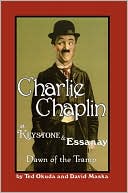
After a single year in the movie business, Charlie Chaplin had risen from being virtually unknown to ranking as of the most recognized comedy star in motion pictures. Exercising his new-found fame and the power that went with it, Chaplin left Mack Sennett’s Keystone Studios for more money and more artistic control at rival Essanay Studios. At his new home, Chaplin experimented with the formula of his comedies, employing more disciplined story structures, greater character development, better motivation for his slapstick, and occasional excursions into the territories of pathos and satire. However, his first few films borrowed heavily from the frenzied, knockabout style that characterized the Keystones.

A Night Out, Chaplin’s second short with the new company, plays like a “greatest hits” compilation of the earlier intoxicated slapstick shorts that the comedian produced for Keystone. The first half of the comedy is almost a repeat of the second half of The Rounders (1914), with Ben Turpin taking the place of Fatty Arbuckle as Chaplin’s drinking buddy. After consuming numerous unknown adult beverages at the local saloon, Charlie and Ben stagger down the street and into a swanky eating establishment. There they add to their buzz with a couple of beers and proceed to pester a French dandy ( Leo White) who is seated at a nearby table. After several bits of drunken shtick and slapstick roughhousing, the pair are booted out of the restaurant by the brutish head waiter (Bud Jamison, who would go on to comic immortality as a foil of The Three Stooges in their early Columbia shorts).

The second half of the short covers much of the same hotel-based inebriated humor previously mined in the first half of The Rounders, Mabel’s Married Life, and especially Mabel’s Strange Predicament (all 1914). Chaplin returns to his room at a hotel and flirts with a pretty girl (Edna Purviance), who turns out to be the wife of the head waiter (who coincidentally lives across the hall). Charlie packs his bag and moves to a different hotel, but the waiter and his wife do as well. Through a series of farcical coincidences, Charlie and the waiter’s wife end up in the same room together in their pajamas, which can only spell trouble for the drunken Charlie.

While Chaplin’s work continued to bloom as he gained more creative freedom at his new studio, A Night Out feels more like a step back than a move forward. Chaplin adds nothing to his previous inebriated shtick in his transition from Keystone to Essanay, and the material seems less fresh the second time around. The fact that A Night Out is twice the length of the Keystones that inspired it only adds to the meandering, slower-paced feel of the short. Finally, Ben Turpin proved to be a less talented comic partner than Roscoe Arbuckle, and A Night Out was Chaplin’s final pairing with the cross-eyed comic.

The only notable aspect of A Night Out is that the film was the first time Chaplin worked with Edna Purviance, the woman who would go on to be his primary celluloid love interest for the next eight years. In A Night Out, Chaplin appears to be trying to shape Edna into a comedienne in the Mabel Normand mold. In this short, Edna even finds herself in another man’s room in her pajamas through the fault of a dog, as Mabel Normand did in Mabel’s Strange Predicament. While Edna had a different screen presence than Mabel Normand, Chaplin quickly found that she was up to the task of playing both the comic and dramatic female leads that he would need for the better pictures that followed.

Drinks Consumed--Beer, wine (possibly Champagne), and unknown alcohol consumed off screen

Intoxicating Effects--Staggering, stumbling, belching, bickering, public disturbance, physical violence, and bar tossed

Potent Quotables--None to speak of

Video Availability--A Night Out is available on numerous budget DVDs. However, the best video release of the short is on Image Entertainment’s Chaplin's Essanay Comedies, Vol 1, which is available as a standalone disc or as part of the box set, Charlie Chaplin Short Comedy Classics. It can also be seen in its entirety at http://www.youtube.com/watch?v=KszgkMeDoXQ.

Similarly Sauced Cinema--Chaplin’s next inebriated Essanay short, A Night in the Show (1915) was a film version of his celebrated stage drunk act.

Read more...

Booze News: W.C. Fields Film Fest!

>> Monday, February 7, 2011


Attention NYC Soused Cinema Enthusiasts!

New York City's Film Forum will pay homage to the patron saint of soused cinema with a retrospective of the work of W.C. Fields from Friday, April 22 – Thursday, May 3, 2011. This celebration will showcase 27 of the Great Man's features and shorts, including the rare silents It's the Old Army Game (1926), So's Your Old Man (1926), and Running Wild (1927). Don't miss this rare opportunity to see these classic booze movies on the big screen.

The films that will be screened are listed below. For showtimes, check out the Film Forum schedule.

April 22 - 23
IT'S A GIFT (1934)
THE DENTIST (1932)
MAN ON THE FLYING TRAPEZE (1935)

April 24 - 25
DAVID COPPERFIELD (1935)
ALICE IN WONDERLAND (1933)

April 25
SALLY OF THE SAWDUST (1925)
THE GOLF SPECIALIST (1930)

THE PHARMACIST (1933)
THE BARBER SHOP (1933)
THE FATAL GLASS OF BEER (1933)

April 26
POPPY (1936)
MISSISSIPPI (1935)

April 27
IF I HAD A MILLION (1932)
TILLIE AND GUS (1933)

April 28
THE OLD FASHIONED WAY (1934)
MRS. WIGGS OF THE CABBAGE PATCH (1934)
SO'S YOUR OLD MAN (1926)

April 29
INTERNATIONAL HOUSE (1933)
MILLION DOLLAR LEGS (1932)

April 30
THE BANK DICK (1940)
NEVER GIVE A SUCKER AN EVEN BREAK (1941)

May 1
RUNNING WILD (1927)

May 1 - 2
MY LITTLE CHICKADEE (1940)
YOU CAN'T CHEAT AN HONEST MAN (1939)

May 2
IT'S THE OLD ARMY GAME (1926)

May 3
SIX OF A KIND (1934)
YOU'RE TELLING ME! (1934)

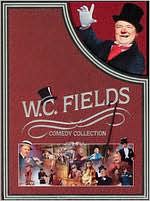
W.C. Fields Comedy Collection, Vol. 2 (Never Give A Sucker An Even Break / The Man on the Flying Trapeze / Poppy / The Old Fashioned Way / You're Telling Me!)

Read more...

Review: Desperado (1995)

>> Sunday, January 30, 2011

USA/C-104m./Dir: Robert Rodriguez/Wr: Robert Rodriguez/Cast: Antonio Banderas (El Mariachi), Salma Hayek (Carolina), Joaquim de Almeida (Bucho), Cheech Marin (Short Bartender), Steven Buscemi (Buscemi), Quentin Tarantino (Pick-up Guy), Danny Trejo (Navajas), Tito Larriva (Tavo), Carlos Gomez (Right Hand)

A weaselly guy (Steve Buscemi) walks into the Tarasco Bar and orders a beer so disgusting that the tap belches with each draw. He then proceeds to spin a tale about a mysterious Mexican with a guitar case full of weapons who massacred the denizens of another saloon while trying to find out information regarding the whereabouts of Bucho (Joaquim de Almeida), the local drug kingpin. The bartender (Cheech Marin) and bouncer (Tito Larriva) listen intently to the stranger’s story, because the bar is actually a front for Bucho’s drug operation. Soon the heralded guitar case-carrying vigilante (Antonio Banderas) appears at the Tarasco Bar looking for revenge on the drug dealers that killed the woman he loved. In his quest for vengeance against Bucho, the vigilante will encounter numerous gun-toting underlings, a knife-wielding goliath (Danny Trejo), and a beautiful bookstore owner with middling surgical skills (Salma Hayek).

Along with Quentin Tarantino, Robert Rodriguez emerged as one of the darlings of the 1990’s indie film movement. To audiences of the time, their films were action-packed, subversive, and most of all, “cool.” Unfortunately, while Tarantino’s films hold up remarkably well, Rodriguez’s output seems a lot less cool today that in did fifteen years ago. Looking back at Desperado, the Hollywood sequel to Rodriguez’s low-budget, Spanish-language debut, El Mariachi (1992), Rodriguez’s weakness as a storyteller are much more apparent now (after a string of movies that celebrate style over substance and an almost fanatical disregard for coherent narrative) than they were at the time of its release.

While the bar-related humor and action scenes in the first half of the film are undeniably fun, the film runs out of steam in the second half as the gunfights get repetitive and the motivations of the hero and villain are undeveloped. For viewers that missed Rodriguez’s debut film, the dream sequences that should explain the reasons behind Banderas’ revenge are confusing, and even audiences that saw El Marachi may have difficulty explaining why the Marachi wants to kill Bucho, when it was another drug lord, Moco (Peter Marquardt), that actually killed his girl. It also doesn’t help that Joaquim de Almeida plays Bucho as a smaller than life baddie and that the revelation of a surprise relationship between him and the Mariachi is laughably corny.

Desperado skates by primarily on the charms of its cast. Luckily, Banderas, Buscemi, Cheech Marin, and especially Salma Hayek have charm to spare. In fact, Robert Rodriguez’s greatest contribution to cinema has been to introduce the lovely Hayek to American audiences. Desperado is worth revisiting for her presence alone, but soused cinema enthusiasts will also enjoy the memorable bar scenes that open the film.

Drinks Consumed--Beer (piss-warm Chango), margaritas (Tequila), and unnamed cocktails

Intoxicating Effects--Belching, swearing, public disturbance, and physical violence

Potent Quotables--SHORT BARTENDER: What do you want?
BUSCEMI: Beer.
SHORT BARTENDER: All I got is piss-warm Chango.
BUSCEMI: That’s my brand.

Video Availability--Desperado has been paired with El Mariachi on DVD and Blu-Ray (Sony)

Similarly Sauced Cinema--A bar was also the setting for the second half of Rodriguez’s next full-length feature, From Dusk Till Dawn (1996).

Read more...

Review: Lucky Lady (1975)

>> Sunday, January 9, 2011

USA/C-118m./Dir: Stanley Donen/Wr: Willard Huyck & Gloria Katz/Cast: Gene Hackman (Kibby Womack), Liza Minnelli (Claire), Burt Reynolds (Walker Ellis), Robby Benson (Billy), Geoffrey Lewis (Capt. Mosely), John Hillerman (McTeague), Michael Hordern (Capt. Rockwell)

Moonshine movies were all the rage in the Sixties and Seventies, so Twentieth Century Fox felt they had a sure hit on their hands with Lucky Lady, a comedy about rumrunners during Prohibition. With actors like Gene Hackman, Burt Reynolds, and Liza Minnelli (fresh off an Oscar win for Caberet) attached to star, Stanley Donen (Singin' in the Rain, Charade) set to direct, and a couple of tunes by Kander and Ebb (Cabaret), what could possibly go wrong? Just about everything, as it turned out. The movie’s twelve-week shooting schedule expanded to twenty; its $10 million dollar budget ballooned to 22 million; and the cast had to be reunited for re-shoots when test audiences didn’t go for the original ending. Worst of all, when the flick was finally released on Christmas of 1975, it belly-flopped at the box office.

Liza Minnelli stars as Claire, a nightclub singer and widow of a smuggler, who concocts a plan to make some dough by transporting Canadian scotch from Tijuana to San Diego on her lover’s yacht. Said lover, Walker Ellis (Burt Reynolds), loses the stake money for the booze to a drifter (Gene Hackman), so Claire reluctantly has to take on a third partner. The trio ends up getting along famously (ménage-a-trios are implied), and they turn their initial bootlegging excursion into a booming business. Unfortunately, this draws the attention of an overzealous coast guard (Geoffrey Lewis) and a gangster (John Hillerman) who wants to snatch control of all of the bootlegging traffic.

It’s easy to see why Lucky Lady failed to connect with audiences and critics in 1975. In fact, it’s hard to imagine who the intended audience for the film could have been. The subject matter was too sexually suggestive for family audiences but not daring enough to appeal to prurient interests. The tone of the film was all over the place, swinging from low comedy to stark seriousness to musical numbers to gruesome violence. The picture was even pretty ugly to look at, due to the use of flashing techniques, in which film is pre-exposed to light to give it a hazy, vintage look. In the case of Lucky Lady, this film flashing didn’t so much evoke a 1930’s setting as it suggested that the crew perpetually filmed in a fog.

Although Reynolds, Hackman, and Minnelli do sample their product from time to time, Lucky Lady is a typical bootlegging movie, in that alcohol is moved around a lot more than it is actually consumed. However, if inquisitive soused cinefiles decide to seek out this forgotten curio, they will probably find it to be an amiable time waster. Lucky Lady isn’t nearly as bad as its reputation. It’s simply mediocre to its core.

Drinks Consumed--Scotch (Johnny Walker Red, Usher’s Green Stripe, and Black & White), and unnamed cocktails

Intoxicating Effects--Staggering, slurred speech, and harmonizing

Potent Quotables--BILLY: My dad always used to make a toast after a good run, but you only drink half of it.
CLAIRE (raising a glass of scotch): To us.
EVERYONE: To us. (They drink.)
KIBBY: What’s the other half for?
BILLY: That you give to the old man who lives in the sea for lettin’ us sail home safe. (They each toss their glasses with the remaining scotch overboard.)
KIBBY: Give me another half there. Will ya, kid.

Video Availability--Lucky Lady -DVD (Shout Factory)

Similarly Sauced Cinema--Angie Dickinson tries her hand at bootlegging but finds robbing banks more profitable in Big Bad Mama (1974).

Read more...
468X60 RENTAL - James Stewart Animated Gif (44kb)

About Me

My photo
I like to drink. I like to watch movies. I like to watch movies about drinking. I like to write about the movies I’ve watched, but only if I’ve had a drink first.

All text including the title "Booze Movies: The 100 Proof Film Guide" Copyright William T. Garver

  © Blogger templates Romantico by Ourblogtemplates.com 2008

Back to TOP